What a Restoration Company Actually Does on a Water Damage Job
There's a lot more to a water damage job than a fan and a mop, and knowing the steps helps you know what to expect.
September 23, 2026 · 3 min read
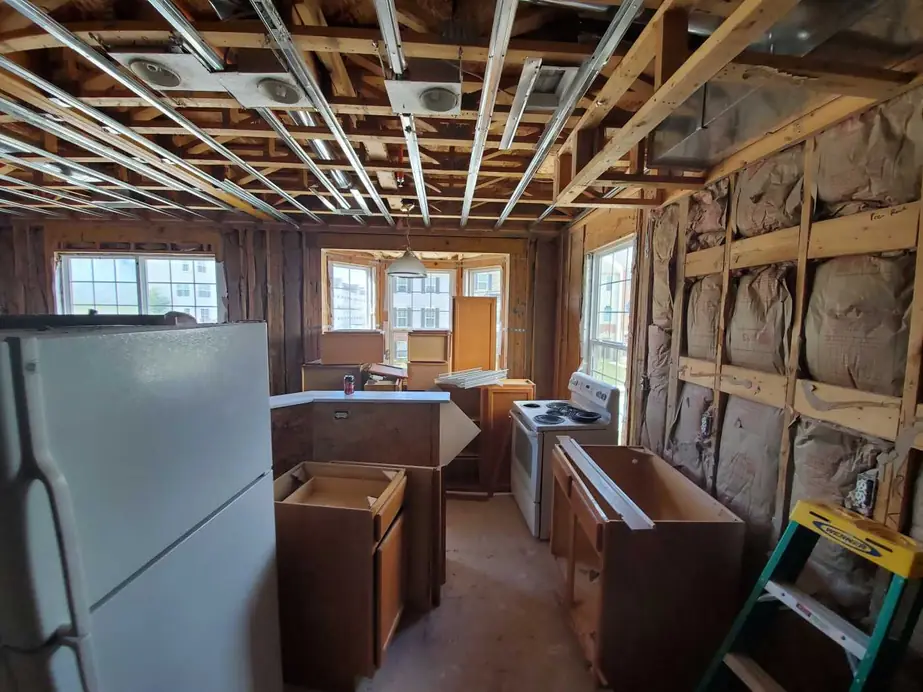
When a homeowner calls about a burst pipe or a flooded basement, it's not always clear what actually happens after the crew shows up. Restoration work looks straightforward from the outside, get the water out, dry the room, done, but a real water damage job runs through several distinct stages, each one building on the last. Here's what that process actually looks like, from the first walk through the house to the day the rebuild is finished.
Inspection and Assessment
The first thing a technician does on arrival is walk the affected area and figure out how far the water actually traveled. Water doesn't stay where it lands. It follows gravity down through floors, wicks sideways into walls, and pools in spaces you can't see without checking. A thorough inspection uses moisture meters and, where needed, thermal imaging to map out exactly which materials are wet, not just which ones look wet, and to identify the source of the water so it doesn't happen again before the job is even finished. This is also the point where the crew talks through what your homeowner's policy is likely to cover and what the scope of the job looks like, so there are no surprises once work is underway.
Extraction
Standing water gets removed first, using pumps for larger volumes and truck mounted or portable extraction equipment for water that's soaked into carpet and padding. The faster this step happens, the less water gets absorbed into subfloor and framing, which is a big part of why response time matters so much on a water job. Extraction isn't just about the visible puddle either. Carpet padding in particular holds a surprising amount of water and needs to be pulled up and checked, sometimes replaced, rather than just dried in place. Baseboards often come off during this stage too, both to check the wall cavity behind them and to let air movers reach the bottom of the drywall directly.
Structural Drying With Real Numbers
This is the stage most people don't see, and it's arguably the most important one. Air movers and industrial dehumidifiers get positioned based on the size and layout of the affected area, and moisture readings get taken daily to track how the drying is actually going. This follows the IICRC S500 standard, the industry benchmark for water damage restoration, and it relies on psychrometrics, essentially the science of how temperature and humidity interact to pull moisture out of building materials. A room isn't considered dry because it feels dry. It's dry when the readings say so.
Antimicrobial Treatment
Once materials are at a safe moisture level, affected surfaces get treated with an antimicrobial solution to address any mold or bacterial growth that may have started during the exposure, and to help prevent new growth from taking hold. This step matters most in the areas that stayed wet longest, baseboards, the bottom few inches of drywall, and subfloor, since that's where organic material and moisture had the most time together.
- Inspection and moisture mapping across the affected rooms
- Water extraction from floors, carpet, and padding
- Structural drying with daily moisture readings
- Antimicrobial treatment of affected surfaces
- Insurance documentation throughout the job
- Reconstruction and rebuild of removed materials
Insurance Documentation and Rebuild
Throughout every stage, photos, moisture logs, and notes get compiled into a record that goes to the insurance company, so there's a clear paper trail supporting the claim rather than a homeowner trying to explain the damage from memory weeks later. Once drying is confirmed complete, the rebuild phase covers whatever had to come out, drywall, flooring, trim, cabinetry, getting the space back to normal. Duraclean Services handles that whole arc under one roof and backs the restoration work with a two year warranty, so a homeowner in Forest Hill or anywhere in Harford County isn't juggling separate contractors for demolition and rebuild.
If you're facing a water damage job and want to know what to expect before you commit to anyone, call (443) 437-4347 and ask. A Duraclean Services technician can walk you through what a job like yours typically involves before any work starts, so you know roughly what each stage looks like and how long a job of that size usually takes from the first phone call to the final coat of paint.
Duraclean Services, (443) 437-4347
Call (443) 437-4347More articles
The First Hours After Water Damage: What to Do Before Help Arrives
What you do in the first hour after a pipe bursts or a basement floods can matter almost as much as who you call next.
Three Problems That Get Worse When Water Damage Is Dried the Wrong Way
A room can look dry on the surface and still be causing damage for weeks after the water is gone.