Three Problems That Get Worse When Water Damage Is Dried the Wrong Way
A room can look dry on the surface and still be causing damage for weeks after the water is gone.
September 23, 2026 · 4 min read
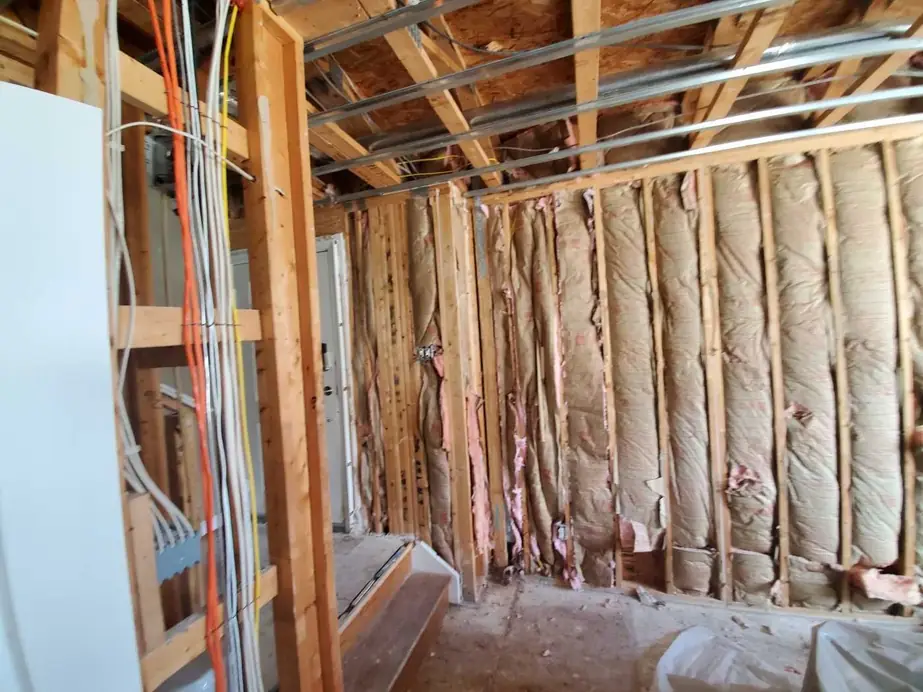
Once the standing water is gone and the carpet feels dry underfoot, it's easy to assume the worst is over. For a lot of Harford County homes, though, the real damage from a leak or a flood shows up weeks later, in places nobody thought to check. Drying a room isn't just about pulling moisture off the surface. It's about getting every wet material back to a normal moisture level before you close the wall back up or lay new flooring, and skipping that step causes three specific problems that tend to get worse, not better, with time.
Hidden Moisture in Walls and Subfloors
A box fan and an open window will dry the top layer of a carpet or a floor fairly quickly, but wood subfloor, the inside of a wall cavity, and insulation hold onto moisture far longer than the surface suggests. Without a moisture meter to check actual readings inside those materials, it's genuinely hard to know whether a wall is dry or just dry to the touch. Moisture trapped behind drywall or under laminate flooring keeps working on the wood and framing underneath it long after the visible signs of water are gone, and by the time it shows up again, as a soft spot in the floor or a stain bleeding through paint, the damage is usually worse than the original leak.
Mold Inside Twenty Four to Forty Eight Hours
According to guidance widely cited by home improvement publications, mold can begin to grow on damp surfaces within 24 to 48 hours of moisture exposure. That's a narrow window, and it starts the moment water touches a wall, not the moment someone notices a problem. A room that was mopped up and left to air dry over a weekend has often already crossed that line by the time anyone thinks to call for help. Mold doesn't need standing water to take hold, either. It needs damp material and time, and both of those are easy to overlook in a wall cavity or under a cabinet toe kick that nobody's looking at.
Weakened Materials That Fail Later
Wood framing, subfloor, and drywall are all built to handle some moisture, but repeated or prolonged wetting breaks down their strength over time. A subfloor that's been soaked and dried without proper structural drying can develop soft spots that don't show up until someone's standing on them. Drywall that's absorbed water and dried unevenly can crumble at the seams. None of this happens overnight, which is exactly why it gets missed. The room looks fine for a month or two, then a homeowner notices sagging, cracking, or a musty smell and has no idea it traces back to a leak that seemed minor at the time. Cabinets, baseboards, and door frames near the original leak are worth a second look too, since wood trim tends to swell, warp, or separate at the joints long after the surrounding drywall has been repainted and forgotten about.
Why a Homeowner Rarely Catches This Alone
None of the three problems above are obvious from a quick look around the room, which is exactly why they get missed so often. A homeowner checking a wall with the back of a hand is checking surface temperature and surface dampness, not what's happening two inches deeper inside the material. Commercial moisture meters used by a restoration crew read percentages inside drywall, subfloor, and framing that simply aren't available to touch, and drying equipment sized for the actual volume of a room does the job in days rather than the week or more it can take a couple of household fans working against the same amount of trapped water.
The Science Behind Proper Drying
Duraclean Services builds every water damage job around the IICRC S500 standard, the industry standard for how a structure should actually be dried, not just how it should look. That means taking moisture readings in the affected materials before drying starts, setting up the right combination of air movers and industrial dehumidifiers for the size and type of the loss, and taking readings again along the way to confirm the numbers are actually coming down. It's a science built on psychrometrics, the relationship between temperature, humidity, and air movement, and it's the difference between a room that's dry and a room that only looks dry.
Catching It Before It Gets Worse
If a leak or a flood happened in your home recently and you're not entirely sure it was dried the right way, it's worth having someone check. Duraclean Services offers free water inspections to Harford County homeowners specifically for this reason, using moisture meters to see what's actually happening inside your walls and floors rather than guessing from the surface. The crew has worked on homes across Forest Hill, Bel Air, Jarrettsville, and the rest of Central Maryland since 1985, and catching a drying problem early is almost always less disruptive than waiting for it to turn into a mold or structural issue. Call (443) 437-4347 if something still feels or smells off in a room that had water damage, even if it's been a while.
Duraclean Services, (443) 437-4347
Call (443) 437-4347More articles
The First Hours After Water Damage: What to Do Before Help Arrives
What you do in the first hour after a pipe bursts or a basement floods can matter almost as much as who you call next.
What a Restoration Company Actually Does on a Water Damage Job
There's a lot more to a water damage job than a fan and a mop, and knowing the steps helps you know what to expect.